
Friday, June 3, 2016
Why are dumbbells called dumbbells?

Wednesday, June 1, 2016
Why do we weigh less in the morning?

Tuesday, May 31, 2016
How does Goo Gone work?

Goo Gone is an oil-based solvent mostly comprised of hydrotreated light petroleum distillates. Goo Gone also contains D-limonene, which is a naturally occurring hydrocarbon found in various citrus fruits like lemons, oranges, limes, and grapefruits. Along with a small amount of orange extract, the petroleum distillates and D-limonene work to break down the bonds of the targeted sticky residue, leaving only a byproduct that can be wiped away easily.
Sunday, May 29, 2016
Why are the insides of chip bags shiny?

When you open a chip bag, you'll likely notice that the inside is shiny and foil-like. This shiny material is a metallized polymer layer that is usually coated with aluminum. The metallized layer serves as an effective air and moisture barrier, playing a large role in extending the product's shelf life. The layer thus serves primarily to better preserve the chips inside.
Thursday, May 28, 2015
What is the origin of "uppercase" and "lowercase"?

In the days of typesetting, compositors stored their type in different type cases. These compositors arranged the type such that capital letters were found in the upper type case while lowercase letters were in the lower case. Over time, these upper and lower designations became a method for differentiating capital and miniscule letters.
Why do shampoo bottles have French translations?

Shampoo bottles found in the U.S. typically provide both English and French translations. While not commonly spoken in the U.S., French is pervasive in Canada. In order to save on production and distribution costs, shampoo companies often use the same bottles in the U.S. and Canada. Since Canada's Consumer Packaging and Labeling Act requires both French and English translations on products sold in Canada, shampoo companies include both languages.
Monday, December 23, 2013
What does "from concentrate" mean?

Sunday, December 22, 2013
How do auto-dimming car mirrors work?

Saturday, December 21, 2013
Why is there no E grade in the grading scale?

The letter-based system used today in many primary, secondary, and post-secondary schools was first used at Mount Holyoke College in 1897, with the exception that it used an E rather than F. Despite Mount Holyoke having the first complete A-E system, Harvard allegedly handed out a B grade in 1883. The letter-based grading scale at Mount Holyoke worked by assigning each letter a numerical range (e.g. A being 90-100), with E representing failure. Eventually, as the A-E grading scale became more popular, the E was dropped and replaced by an F because the letter F more logically denotes failure. The other letters in the system, A, B, C, and D, represent the four possible passing grades.
Friday, December 14, 2012
Where did the term "cup of joe" come from?

Today, the phrase "cup of joe" is just another way of saying "cup of coffee." In fact, there is even a coffee shop called Cup o' Joe. The phrase first appeared in print around 1930 and has since popularized. Though the exact origin of the phrase is unknown, there are three common theories that purport to have the answer. The first theory suggests that "cup of joe" is a byproduct of the 1860 song "Old Black Joe" by Stephen Foster. Given that the song fails to mention coffee and that the phrase "cup of joe" did not appear in print until 70 years later, this theory is likely not true.
The second theory holds that the phrase appeared as a result of the 1914 ban of officers' wine messes on U.S. naval ships imposed by admiral Josephus "Joe" Daniels. Since wine messes were no longer available on naval ships, officers would turn to coffee as a substitute. Accordingly, the theory holds, coffee became known as '"joe" after the man who, though indirectly, popularized it. This theory faces similar problems as the first: the ban on officer wine messes occurred prior to 1930 and, more importantly, the 1914 ban only eliminated wine messes for officers, having little effect on the coffee consumption of non-officer seamen who, since 1862, had faced a ban of alcohol on naval ships.
The third and most tenable theory holds that "joe" is derived from "java" or "jamoke," two common substitutes for "coffee" around 1930. The word "jamoke"was already a combination of java and mocha, so why not shorten it to "joe"?
Wednesday, December 5, 2012
Why are there colored dots on soda cans?

The colored dots found on aluminum soda cans near the nutrition information consist of all of the colors used in the can design. Of course, these colors vary depending on the design of the can. During manufacturing, a number of different machines apply color to each can; usually, each machine uses only one color. If a can makes it through production and its red dot, for example, is faded or absent, then laborers will be able to trace the problem to the single machine applying red color, without shutting down all of the machines to resolve the problem.
Monday, December 3, 2012
Why do some locomotives run backward?

Trains carrying large loads are usually pulled by two or three locomotives, collectively called a locomotive consist. Usually, the first locomotive is facing forward and the other locomotives are facing backward. This seemingly odd phenomenon is actually a common and convenient practice in the railroad industry. The leading locomotive faces forward to allow the conductor to see the path ahead and follow various signals. The second (and sometimes third) locomotive usually faces backward for the sake of convenience. Modern locomotives are able to run both "forward" and "backward" without compromising efficiency. That being said, by positioning a second locomotive backward behind a leading locomotive, a convenient pair is formed. Having a locomotive facing each direction allows for quick turnarounds, as the backward locomotive can quickly serve as the leading locomotive when necessary. The efficacy of this pairing is what makes it a standard practice in the rail industry today.
Wednesday, November 14, 2012
Where did surnames originate?
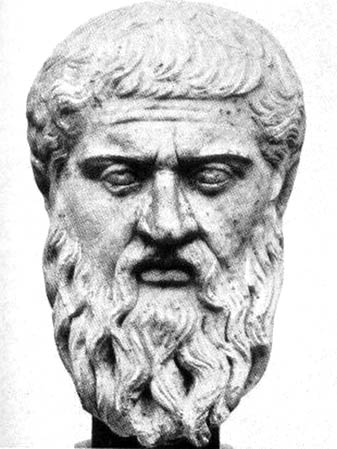
Surely we can all name at least one mononym, or an individual addressed by a single name. Many Greek philosophers, like Socrates, Plato, and Aristotle, are only addressed by one name. Similarly, historical figures like Pocahontas, Montezuma, Stalin, and Michelangelo are only addressed by one name. Not all mononyms only have one name, though. In fact, the majority of mononyms have first, middle, and last names; the adopted single name can result from a number of different factors, like fame, a pseudonym, or simplicity.
The origin of surnames is usually attributed to China and the Roman Empire. Before the public at large used surnames, the privilege was reserved for the aristocracy in large empires. In as early as 3000 B.C., most of the public in China used surnames. Around 3000 years later, the Roman empire followed suit. As populations grew around the world and the need for easier identification rose, the use of surnames increased exponentially. Countries in the Western world were next in adopting surnames. It is estimated that the turn of the 16th century marked the time where the heavy majority of people had surnames at birth.
Thursday, November 1, 2012
Why don't deep-sea fish get crushed by pressure?

Unlike humans, many species of fish are able to survive the pressure of the deep ocean. Deep-sea fish can survive this pressure because there is a negligible pressure difference between their insides and the water. In other words, they don't have any spaces full of air to be crushed. A gas-filled organ often found in fish, a swim bladder, is missing in deep-sea fish. Without this bladder, deep-sea fish do not have to worry about being crushed.
Monday, October 22, 2012
Why do our tongues stick to metal in the winter?

This question addresses a dare—or to remain true to the movie, a "triple dog dare"—popularized in A Christmas Story: to stick your tongue to a pole in the winter. A tongue can stick to metal if the metal is below the freezing point of water, 32° Fahrenheit. This phenomenon occurs because the water on a tongue freezes when it touches a sub-32°F metal. Of course, if a metal is very cold, then a tongue will freeze to it more quickly.
The property which allows this rapid freezing to occur is thermal conductivity, or the ability of a material to conduct heat. Metal has considerably high thermal conductivity which means, in the case of the tongue-to-metal dare, it is able to absorb the heat of the tongue at a faster rate than the body is able to supply heat to the tongue. This high thermal conductivity is responsible for quickly cooling the water on a tongue to a temperature where it can freeze. Aside from metals, other materials of high thermal conductivity, like ice, can cause a similar freezing effect. In contrast, materials of low thermal conductivity would not be able to overcome the heat being supplied to the tongue, so the freezing effect would not occur.
Wednesday, October 17, 2012
Do fish sleep?

Fish do sleep, but not by human standards. Specifically, they enter into a state of rest which serves a similar purpose as sleep. Instead of going unconscious and entering into various stages of sleep like humans, fish usually float in one place or rest on a stable surface (e.g. coral, sea bottom, etc.) and enter an energy-saving, restorative state. In this state, fish will become less aware of their surroundings and their metabolism will slow. Interestingly, research has shown that fish exhibit symptoms of sleep-deprivation if they do not get enough rest.
Monday, October 15, 2012
Is the sea level the same around the world?

Intuition seems to suggest that the ocean should even itself out around the world. Interestingly, this is not the case. The sea is not the same height around the world; rather, local sea levels vary for a number of reasons. These reasons include the presence of ice sheets, changes in prevailing winds, differing ocean currents, the presence of coastal mountain ranges, and more. The global sea level measure is an average of the local sea levels around the world. The National Oceanic and Atmospheric Administration (NOAA) tracks the latest trends in sea levels. These trends are available for viewing via the NOAA website here.
Wednesday, October 3, 2012
Where do barber poles come from?

Barber poles date back to medieval times when barbers not only performed hair cutting services but tooth extraction and bloodletting as well. In the process of bloodletting, a patient would hold and squeeze a red pole to increase blood circulation (and to hide blood stains). After bloodletting, the patient would receive bandages to heal. The white on the barber pole represents these bandages. In order to advertise their services to the public, barbers would wrap a red bloodletting pole with white bandages and put it outside of their shop.
In some places, like England, legislation dictated that surgeons needed to be distinguished from one-trade barbers, so barbers were required to advertise with blue on their pole while surgeons would use red. Some barber poles in the United States have red, white, and blue colors rather than the traditional red and white. This phenomenon is thought to be an expression of the country's national colors. Alternatively and in conjunction with the bloodletting theme, the blue could represent deoxygenated venous blood while the red represents oxygenated arterial blood. Today, barbers shops around the world continue to place barber poles (although commercialized and plastic) outside of their shops to advertise their services.
Sunday, September 30, 2012
What is quicksand and how do we escape it?

Quicksand is not a particular type of sand per se; rather, quicksand is ordinary sand mixed with water. When enough water gets trapped in sand (i.e. suspended and unable to flow), it reduces the friction between sand particles such that the sand can no longer support weight. In the right conditions, this mixture of sand and water forms what we know to be quicksand. Quicksand usually forms when a certain underground source of water rises into a bed of sand.
Escaping quicksand is counterintuitive. The typical reaction of a person who has stepped (or fallen) into quicksand is to panic and struggle to get out. Such thrashing only causes the person to sink faster because, as mentioned before, water is preventing the usual friction between sand particles. There are a few key things a person should do to escape quicksand. First, they must remain calm so as to avoid hastening their sinking. Second, they should increase their surface area by spreading their arms and legs out. Next, they should lay on their back and stay still, allowing them to float to the surface. Since humans are less dense than quicksand (the mixture of sand and water), they should float to the surface. If the floating strategy fails, then the the next step is to make slow movements and attempt to climb to the surface.
Thursday, September 27, 2012
Where does the phrase "once in a blue moon" come from?
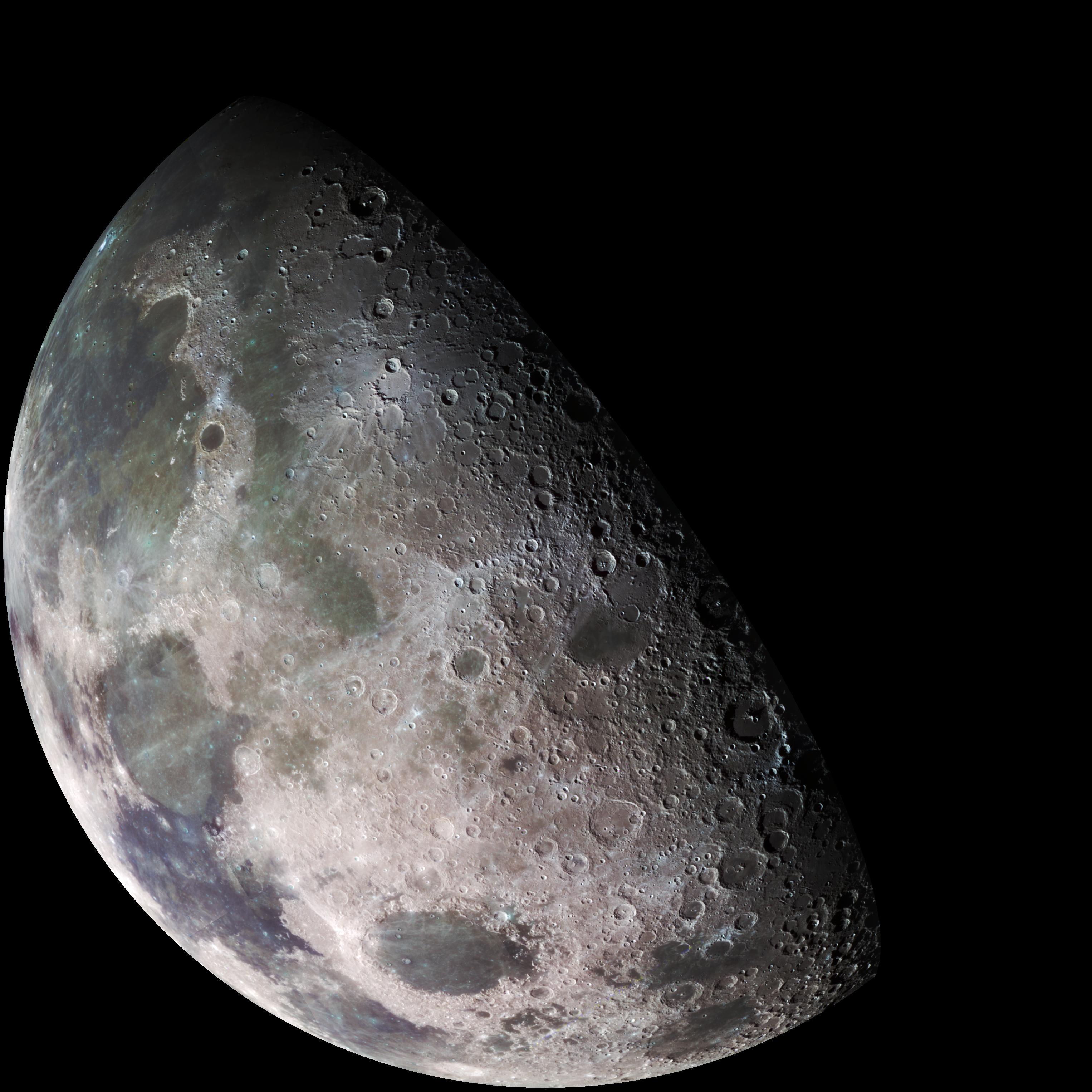
The phrase "once in a blue moon" is used to indicate a rare event. Fittingly, the event of a blue moon is indeed rare...and no, the moon is not actually blue. A "blue" moon refers to the second full moon in a single month. Since a typical lunar cycle lasts about 29.5 days, it is rare for any single month to witness two full moons. The last blue moon took place recently on August 31, 2012.
There is a different, older definition of a blue moon which refers to the third full moon in a season with four full moons. This old definition has slowly atrophied with time as the new definition has popularized.
Subscribe to:
Posts (Atom)